
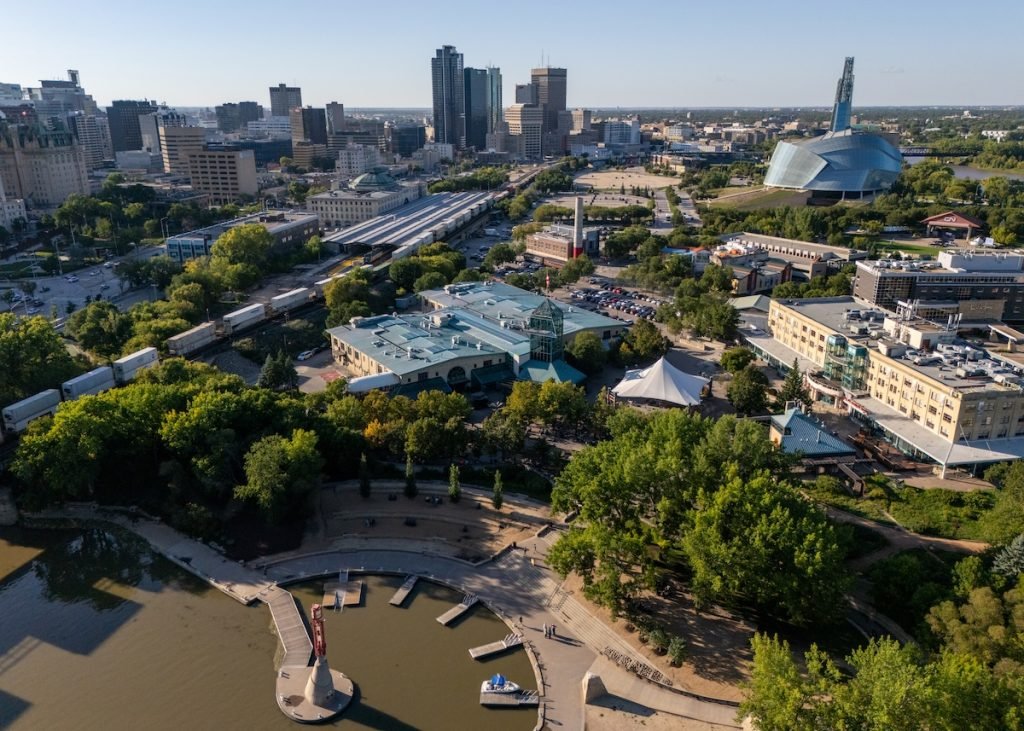
The three regions participating in the federal Rural Community Immigration Pilot (RCIP) have announced their 2026 priority sectors and occupations—with several overlaps.
To obtain permanent residence through the RCIP, candidates are required to have a job offer from an employer designated by the community, in an eligible occupation.
Your occupation’s TEER category–shown in the second digit of your National Occupational Classification (NOC) code–determines the language standards you must meet. More information to follow.
In this article, we examine the sectors and 25 occupations each region participating in the RCIP has chosen to prioritize in 2026.
Participating regions in Manitoba include:
- Altona/Rhineland;
- Brandon; and
- Steinbach.
You may still be eligible for consideration under the RCIP if you have a job offer in an occupation not on a region’s list of priority occupations.
Altona/Rhineland
The Altona/Rhineland region, which consists of the Town of Alton and surrounding Rural Municipality of Rhineland, has selected the sectors listed below as high priority in 2026:
- Education, law and social, community and government services;
- Sales and services;
- Trades, transport, and equipment operators;
- Natural resources and agriculture;
- Manufacturing and utilities; and
- Health.
The year prior, the Altona/Rhineland region had five priority sectors (the first five on the list), with the health sector being a new addition in 2026.
According to the official RCIP website for Altona and Rhineland, “recommendations will be issued on a first-come, first-served basis throughout the year.”
Brandon
In 2026, Manitoba’s second-largest city—located in southwestern Manitoba on the Assiniboine River—is prioritizing workers with job offers in the following high-priority sectors:
- Health;
- Trades, transport and equipment operators;
- Manufacturing and utilities;
- Natural and applied sciences;
- Education, law and social, community and government services; and
- Natural resources and agriculture.
The sectors selected by the city of Brandon this year largely mirror those chosen in 2025, with the only change in 2026 being the addition of a new sector: natural resources and agriculture.
Steinbach
The fast-growing city of Steinbach, tucked away in southeastern Manitoba, has selected six sectors to be prioritized under the RCIP in 2026:
- Health;
- Education, law and social, community and government services;
- Sales and service;
- Trades, transport and equipment operators;
- Manufacturing and utilities; and
- Natural resources and agriculture.
Steinbach’s 2026 priority sectors closely match those of the previous year, with the inclusion of natural resources and agriculture being the only change.
Who is eligible under the RCIP?
The Rural Community Immigration Pilot (RCIP) is a five-year pilot launched in 2025 (set to expire in 2030). It assists rural communities outside Quebec in addressing labour shortages.
There are 14 participating communities, each of which can select up to six priority sectors and 25 priority occupations to help fill gaps in the labour market.
This is an employer-led PR pathway, meaning candidates must have a job offer from an employer designated by the community in order to qualify.
The employer recommends you to the community, and if approved, you may apply to Immigration, Refugees and Citizenship Canada for PR.
Beyond a job offer, candidates must also meet other eligibility criteria related to:
Work experience: A minimum of one year (1,560 hours) of related work experience within the last three years.
Education: Have a Canadian credential or foreign equivalent. An Educational Credential Assessment is required if the latter.
Language proficiency: Demonstrate language proficiency based on the TEER of your job offer:
- TEER 0–1: CLB 6
- TEER 2–3: CLB 5
- TEER 4–5: CLB 4
Proof of funds: Provide proof of sufficient funds to support yourself and your family—from $10,507 for a single applicant to $27,806 for a family of seven.
Candidates are expected to demonstrate an intent to reside in the community.
